
The fall of 2023, I traveled to Seattle to attend the annual conference of the Association for Behavioral and Cognitive Therapies for the first time in several years. I attended Michelle Craske Ph.D’s keynote talk on reward processing and positive affect and I wanted to share what I learned, as it has really stuck with me.
Positive Affect Treatment for Depression
She shared her research on Positive Affect Treatment to reduce depression. Many treatments for depression focus on reducing suffering, but this treatment focuses on teaching the skills of lovingkindness, generosity, appreciation, joy, gratitude, and visualizing the positive.
Her research found that the positive affect treatment was more effective in uplifting mood, reducing negative feelings, and even decreasing suicidality. The study even used virtual reality to create positive moments. Here’s one exercise you can use to recreate a positive moment from your life:
Begin by finding a comfortable and quiet space where you feel at ease. Take a moment to breathe deeply and center yourself. Now, think of a memory, one that brings you joy and comfort, a time where you felt truly happy.
Now, close your eyes, and let's bring this memory to the forefront of your mind. Picture yourself back in that moment, as if it's unfolding right now.
Notice the environment around you—what do you see? Look at the colors, the light, the shapes. Now, focus on the sounds that accompany this memory. What do you hear?
Moving on, let's bring in the other senses. Can you touch anything in this memory? What textures do you feel? And are there any scents or tastes that are associated with this positive experience?
Most importantly, let's dive into the emotions you felt during this moment. What is bringing you joy in this memory? Try to relive these feelings in your body now.
*Bonus points if you share this memory with a loved one, in as much detail as time allows.
Why This Matters for Emotional Wellbeing
Positive affect is not for denying pain or pretending hard things aren’t happening. It’s to strengthen the brain’s capacity to experience joy, connection, and meaning alongside difficulty.
Research in behavioral and cognitive therapies increasingly shows that building positive emotion skills can directly reduce depressive symptoms, improve motivation, and expand behavioral flexibility. In other words: cultivating joy is clinically powerful.
If you want support cultivating the positive, we’re happy to help. We have some openings via telehealth, including some after school slots so please reach out if you need support.
Dr. Rachel and the Well Brain Team
Research Corner
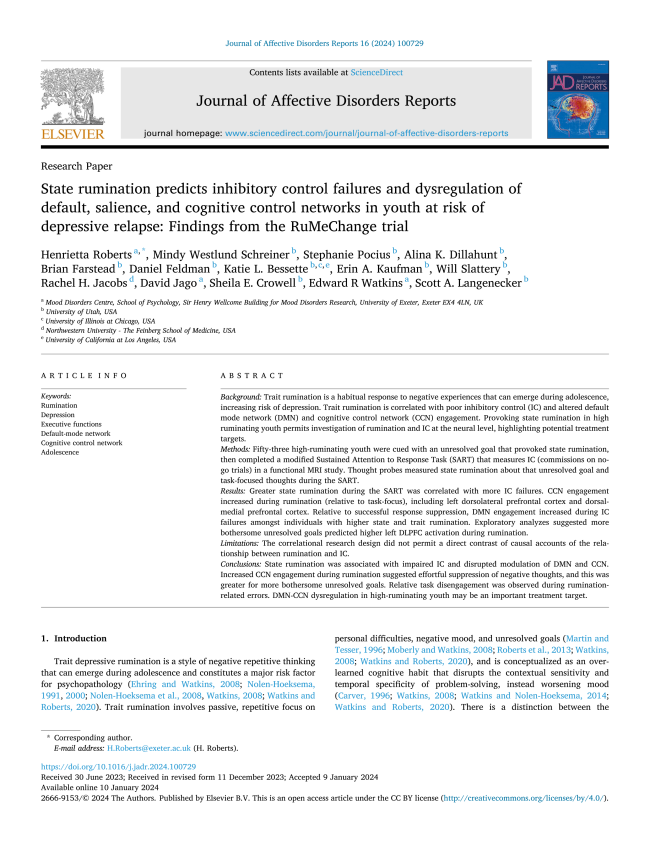
Our recent research publication describes how rumination disrupts brain networks involved in cognitive control and attention; leading to difficulties in managing impulsive responses.
This adds to a growing body of neuroscience research suggesting that repetitive negative thinking doesn’t just affect mood—it impacts executive functioning and self-regulation systems in the brain. Interventions that reduce rumination and increase positive affect may therefore support both mood and cognitive control.
What We’re Listening To: Meditation for Waiting in a Line By Sharon Salzberg
A beautiful example of bringing lovingkindness into ordinary, mildly frustrating moments—like standing in line.
What We’re Reading (& Doing): Designing Your Life & Designing Your Life Workbook by Bill Burnett and Dave Evans
This is a book I end up discussing with a lot of young people in our sessions and I personally really enjoy the workbook. This is based on a course developed at Stanford University to help students design their career path. I haven’t checked out any of their virtual classes yet, but it is on my bucket list.
For adolescents and young adults especially, values clarification and intentional design can counteract rumination and build forward momentum.
What We’re Watching: The Habits of Happiness Featuring Matthieu Ricard
A thoughtful exploration of how happiness can be cultivated through mental habits and compassion practices.