
Noticing the Good Even when the year was hard
It’s not too late to celebrate your wins from 2025.
They are there even if they’re not obvious.
If you’ve been in session with me, you might notice I often start with celebrations. Not the highlight-reel kind, the real ones: moments of effort, showing up on a hard day, trying something new, or getting through something you didn’t think you could. Just showing up counts!
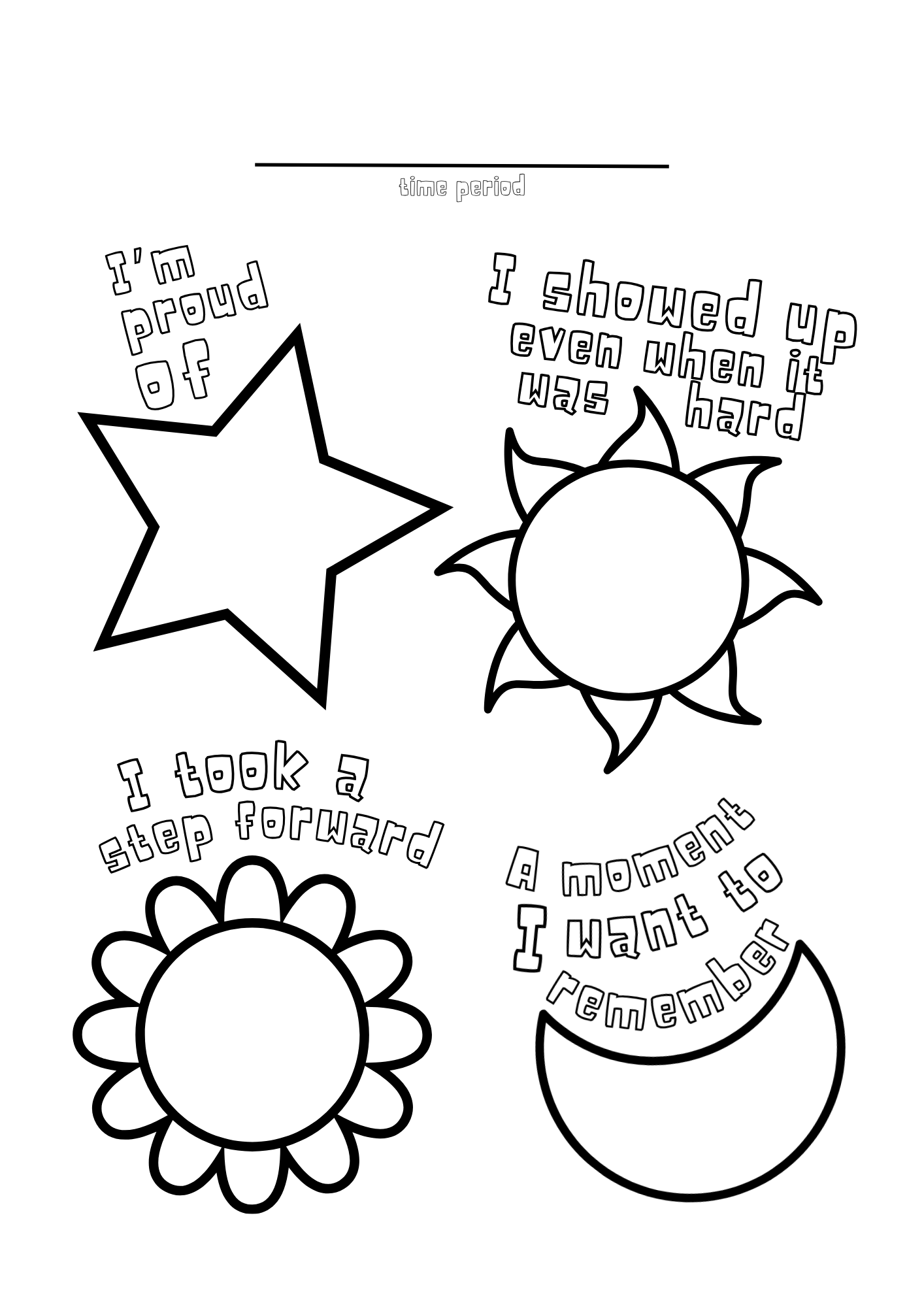
Last year I shared an end-of-the-year reflection worksheet and a few of you asked for an updated version. This one’s a little belated, but I like taking the whole cozy month of January to reflect. We don’t need strict deadlines for reflection.
*This year I’ve left the timeframe blank, you could even practice this monthly or quarterly.
2025 was a bumpy year for many, but even so I bet you met some challenges head on, were supported by someone in your corner, or had a brief moment of steadiness or pleasure.
Why CBT focuses on “Catching the Positive”
In CBT noticing positives isn’t about pretending things are fine, it’s about training attention.
Our brains naturally scan for threats and problems. In the context of anxiety or depression, this system can become overactive, narrowing our attention to what’s going wrong and making it harder to notice anything else.
A healthy mental habit to counteract this tendency is to intentionally pay attention to:
Effort
Learning
Moments of coping or courage
What lights us up
Savoring moments of ok-ness, if not pleasure
We want to celebrate approximations, which means recognizing that progress happens in steps, not leaps. The R in the FEAR plan we often use in session (Kendall’s Coping Cat) stands for Results and Rewards. We reflect on how what we tried worked, but also give ourselves credit not just for the outcome, but for walking through the steps and giving it a try. It is important not to only reward perfect results. Rather we reward effort and skill use, which motivates us to keep going and builds momentum.
CBT Reminders for Adults
Trigger: “Nothing went well this year” or “I didn’t do enough”
Move: Look for approximations—effort, bravery, learning, or recovery
Practice: Name one thing you tried, handled, or survived and pair it with a small reward (rest, connection, acknowledgment)
CBT Reminders for Parents in Coaching a Child:
“What did you do differently than last time?”
“What would you tell a friend who tried as hard as you did?”
Ask your child to finish one sentence:
“Something I tried this year—even though it was hard—was ______.”
Take Home Message
Celebrating wins in CBT doesn’t mean ignoring pain or difficulty.
It means teaching the brain to register effort, courage, and growth—so we have the energy to keep showing up.
This year, we’ll keep practicing together - one step at a time.
Dr. Rachel and the Well Brain Team
P.S. If you need a new year challenge, I just read this new study suggesting a one week social media detox was associated with lower depression, anxiety, and insomnia among young adults. (Fine print: not a clinical population, so this study has limitations).
What We're Reading: The Happiness Trap – Russ Harris
An ACT-informed book that emphasizes noticing what’s happening, taking values-based steps, and making room for discomfort.
February Meditation Challenge with Sharon Salzberg, one of my favorite meditation teachers:
This month-long program runs from February 1st - 28th and consists of 28 lessons, organized into four week-long themes: Concentration, Mindfulness of the Body, Mindfulness of Thoughts/ Emotions, and Lovingkindness. Lessons are sent to you via email to complete at your convenience each day. The program covers a full spectrum of meditation techniques to empower you with a robust toolkit for a happier life.The Challenge is offered on a sliding scale basis, with a suggested contribution of a dollar-a-day ($28), to keep this offering as accessible as possible. Full scholarships are available for those who cannot contribute financially.
https://sharon-salzberg.teachable.com/p/real-happiness-meditation-challenge-2026